Collection Introduction
The STEM field encompasses academic study and curriculum development centred on science, technology,
engineering, and mathematics (Hallinen, 2022). The underrepresentation of women in STEM (science,
technology, engineering, and mathematics) fields is a long-standing issue influenced by historical, cultural,
and educational factors. Although progress is being made, gender stereotypes and systemic barriers continue
to prevent women from fully participating in these fields. Media interventions such as video are increasingly
being used to challenge these inequalities. This literature review explores the role of intervention videos in
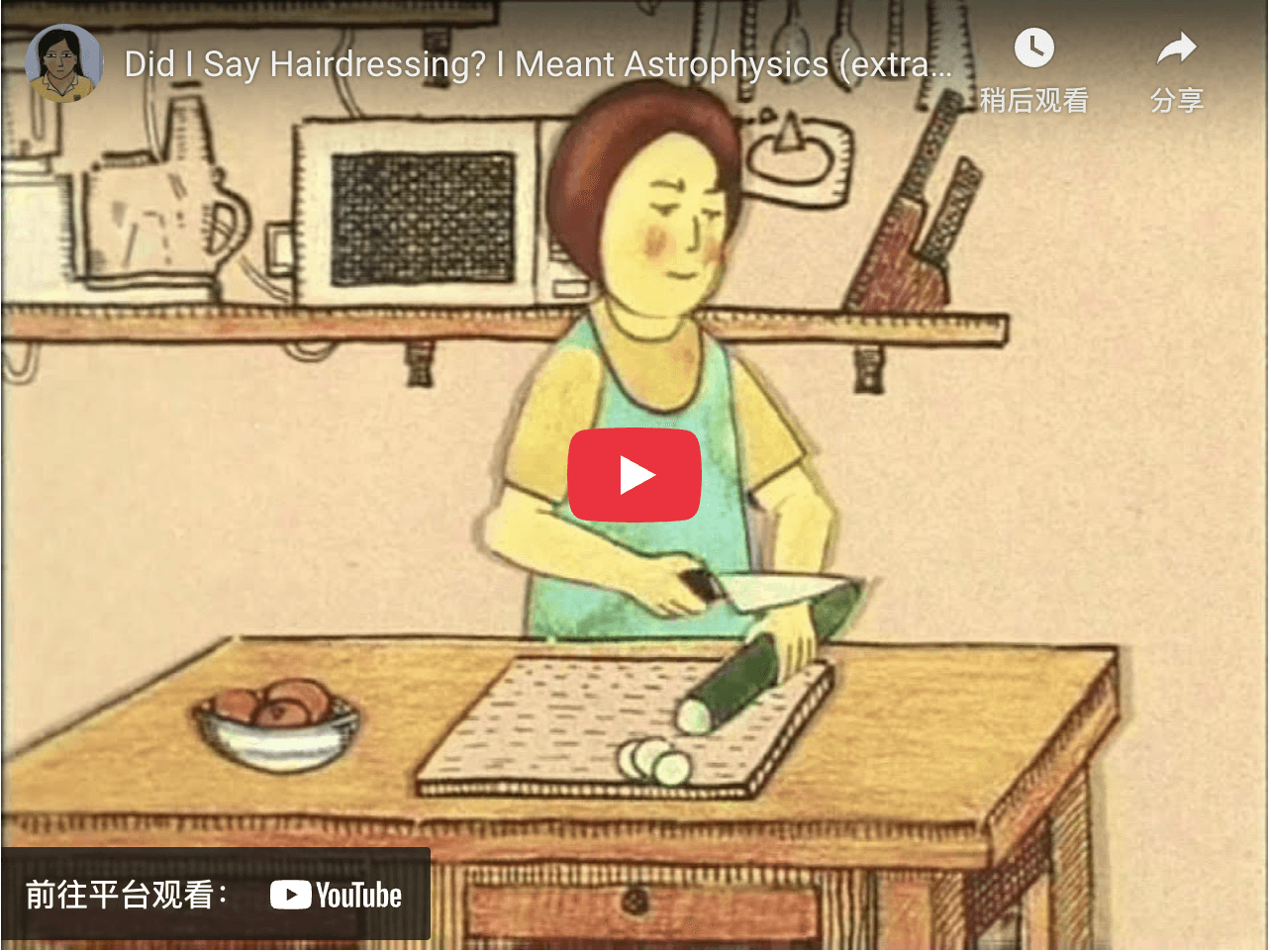
addressing gender bias in STEM, focusing on the video “Did I Say Hairdressing? I Mean Astrophysics” (1998),
Leeds Animation Studios.
With the development of digital technology and new media platforms, disseminating information related to
STEM (Science, Technology, Engineering, and Mathematics) fields has never been faster or easier. However,
despite this increased exposure, media stereotypes of STEM practitioners continue to influence the public’s
understanding of gender roles largely. According to surveys, media stereotypes of scientists undermine women’s
interest in and identification with STEM careers (Hasan Gürkan et al., 2024). Despite the ‘visibility’ of women
in the media, their professional influence and dominance are still weakened. While the media intends to challenge
stereotypes, it perpetuates gender inequality in structures and narratives. Stereotypes have not disappeared, and the
gender stereotypes and perceptions associated with inequality in STEM disciplines are those that prioritise women’s
roles, which diminish those women’s roles in science (Eizmendi-Iraola & Peña-Fernández, 2022). Through
surveys (Sáinz et al., 2019), many female practitioners acknowledge a lack of identifiable female STEM role models
growing up.
Literature review
Intervention videos are a form of communication created around a specific social issue to influence audience
perceptions, attitudes or behaviours (Noar, 2006). These videos are widely used in public health, education,
civil rights, etc., and are characterised by strong communication and high emotional penetration. With the
diversification of communication media, the presentation form of intervention videos has also expanded from
traditional documentaries and TV advertisements to more flexible visual means such as short videos, interactive
images and animations.
BACK TO TOP
According to the research, gender inequality still exists despite the upward trend of female participation in
STEM fields in recent years. According to the Institution of Engineering and Technology (IET), the number
of women working in STEM careers in the UK will have exceeded one million by 2024. However, they comprise
only 29% of the STEM workforce (IET, 2024).This data suggests that despite increasing women’s access to the
science and technology professions, women still face significant inequalities in career structures, progression
pathways and social perceptions. Furthermore, the survey revealed that over half of UK girls lack confidence
when studying maths, and this confidence gap is also evident in subjects such as science and technology,
reflecting the impact of gender stereotypes as early as the education stage (Weale and correspondent, 2024).
As an important type of intervention video, animation has been increasingly used in gender education and social
equality issues due to its symbolic language, concise narrative and emotional guidance. Research has shown that
animation can effectively lower the threshold of understanding complex information and promote viewers' empathy
for the situation of marginalized groups through characterization and visual metaphors (Mayer and Moreno, 2002).
In addition, animation can transcend cultural and linguistic constraints, making interventions more universal and
communicative.
Noar (2006) defines a media intervention as a communication strategy that consciously uses media tools to
promote behavioural change in a mass population, often based on communication theory and public health
frameworks’ (Noar, 2006). In Moss-Racusin et al.‘s (2018) investigation, awareness of gender bias could be raised
through VIDS (Video Interventions for Diversity in STEM), creating a shift in participants’ attitudes towards
women in STEM fields and leading participants to reduce bias and advocate for gender equality. Through these
research investigations, it has been shown that video interventions can have a positive impact on people’s behaviour.
However, there are many limitations in the practical application of intervention videos. For example, their
effectiveness is highly dependent on the context of the audience and the media environment. In some cases,
the structural depth of the issue may be obscured by formalised emotional narratives (Keller & Lehmann, 2008).
Particularly in the case of gender issues, a lack of critical awareness in intervention strategies may reinforce
stereotypes or provoke resentment.